One monthAn illustration, not a real case
Understanding Coercive Control
Ten sourced episodes, every source behind them, and where each state's law stands.
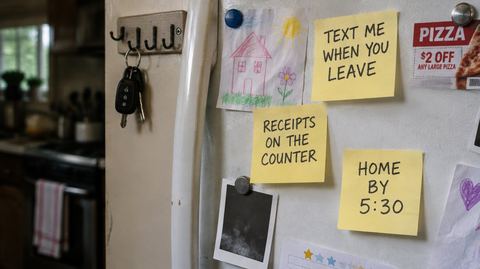
Any single act can look small. The pattern is the point. S-001
A report sees one date. The person lives the whole month:
movements monitored
communications monitored
finances controlled
movements monitored
daily behavior controlled
isolation
communications monitored
basic necessities withheld
movements monitored
technology used to stalk or harass
finances controlled
humiliation
isolation
communications monitored
dependence
movements monitored
identity documents controlled
finances controlled
What happened on this date?
What a protective order petition asks. Episode 1.
communications monitored
punishment
movements monitored
access to services controlled
isolation
communications monitored
abusive litigation
finances controlled
movements monitored
financial exploitation
communications monitored
What is coercive control?
Established finding
Coercive control is a pattern of behavior that takes away another person's freedom: the rules, the monitoring, the punishments, the shrinking world. Sociologist Evan Stark's 2007 book framed domestic abuse this way, as an ongoing pattern that strips a person's liberty rather than a series of separate violent incidents. Any single act can look small. The pattern is the point.
Source: S-001, a 2025 law journal article that summarizes Stark.
Contested
Researchers have not settled on a single definition. One proposal says three things must be present: behavior aimed at controlling the other person, that person's experience of it as controlling, and a credible threat behind it.
Source: S-003, read through a bench-book summary of the 2017 article.
Lawchecked Nov 10 to 13, 2026
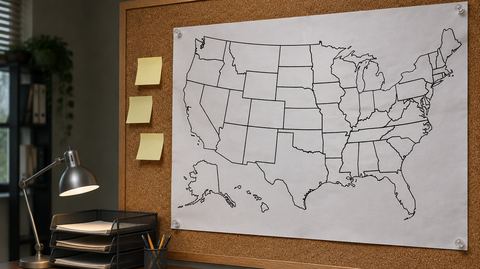
The law is uneven. Eleven states name and define coercive control in a statute, and they do not agree on what it means or where it applies.
Source: State Law Atlas. Group 1, 11 rows, each checked between Nov 10 and Nov 13, 2026.
Series 1: Coercive Control Series
Evidence-based education for US advocates
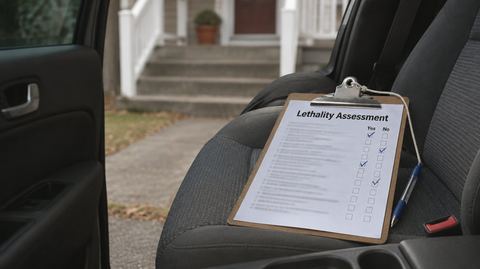
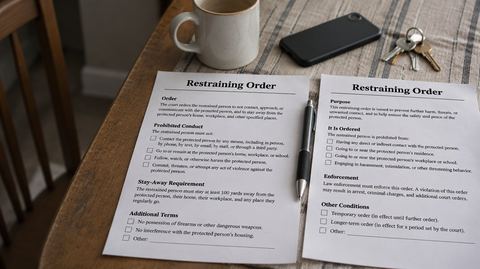
Ten episodes for US advocates who work with victims and survivors: shelter and hotline staff, legal and court advocates, coalition trainers. Each one sets out what the research shows, what the law says in the states it covers, and what court opinions and other public records show. Each closes with what it means on Monday morning.
New episodes on Tuesdays, Dec 1, 2026 to Jan 26, 2027. The dates are a plan and may change. Sources and chapters are already on each episode's page.
December 2026
January 2027
-
1Dec 2026TuesdayNext
-
8Dec 2026Tuesday
-
15Dec 2026Tuesday
-
22Dec 2026Tuesday
-
29Dec 2026Tuesday
-
5Jan 2027Tuesday
-
12Jan 2027Tuesday
-
19Jan 2027Tuesday
-
26Jan 2027Tuesday






How this series checks its facts
- Every claim has a numbered source. Each one is marked as an established finding, a contested claim, or opinion.
- Every statement of law carries the date it was checked. Laws change and differ by state. The State Law Atlas shows the date on every row.
- Real cases come from the public record. Published court opinions and official reports. We add nothing that identifies anyone beyond what the source already publishes.
- Debates are set out fairly. Criminalization, measurement, gender and custody each get both sides' strongest argument.
Established finding
Contested
Opinion
Sources library
The series library holds 159 sources, plus the State Law Atlas. Search them, or filter by episode, kind and place. Each one lists its citation, its link and the episodes that use it.
State Law Atlas
Where does your state stand on coercive control?
All 50 states and D.C., sorted into four groups. Every row has a citation, a source link, the date it was checked and how sure we are.
- 11 name and define it
- 4 come close
- 11 use older words (our reading)
- 25 nothing in statute yet that we found
All 51 rows were checked between Oct 25 and Nov 13, 2026.
Open the atlas